- Home
- Knowledge & Research Center
- Scientific Articles
- Function, Occlusion and Posture – Interconnections in Comprehensive Dentistry
Function, Occlusion and Posture – Interconnections in Comprehensive Dentistry
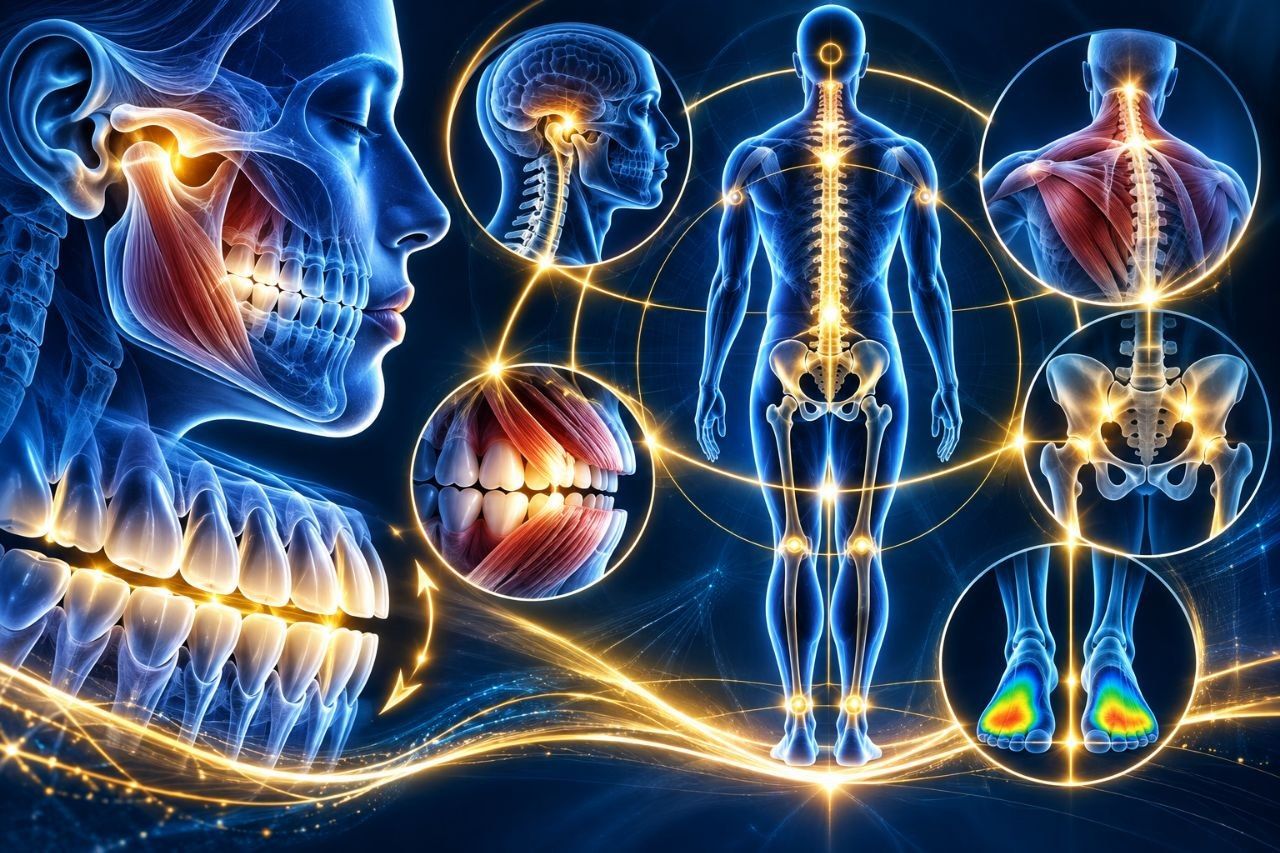
A comprehensive perspective on the relationships between occlusion, masticatory function, and postural balance
Function, Occlusion and Posture – Interconnections in Comprehensive Dentistry
Oral function does not exist in isolation. Occlusion, the masticatory muscles, the temporomandibular joints, and the position of the head and body are components of a complex functional system whose individual elements may interact.
At Laser Dental Clinic, these interconnections are considered as part of the comprehensive assessment of the patient. The aim is not to assume a universal cause-and-effect relationship between occlusion and posture, but to determine whether, in the individual patient, functional characteristics are present that may be relevant to diagnosis, treatment planning, and follow-up.
Functional Assessment
Depending on the clinical indications, the assessment may include analysis of occlusion and masticatory function, the condition of the temporomandibular joints, the activity and symmetry of the masticatory muscles, as well as postural characteristics.
When indicated, the clinical examination may be complemented by functional diagnostic methods, including TEETHAN EMG surface electromyography, postural analysis, and other appropriate assessments.
The results of individual examinations are not interpreted in isolation. They are considered together with the patient's history, clinical findings, symptoms, diagnostic imaging, and other relevant data.
From Functional Assessment to Individualized Treatment
When functional disorders or imbalances are identified, their significance is evaluated in relation to the individual clinical case and the planned treatment.
This information may be relevant in functional, orthodontic, restorative, prosthetic, and comprehensive treatment, particularly when occlusal relationships are being modified or extensive rehabilitation is planned.
The aim is to evaluate the treatment outcome not only in relation to individual teeth and restorations, but also in terms of function, comfort, and long-term stability.
A comprehensive approach does not imply that every postural deviation has a dental origin or that modification of the occlusion necessarily results in a change in overall posture. These interconnections are assessed individually and only when clinically relevant.
Within MFSP™ – Medical Functional Stability Protocol, functional data are integrated with biological, structural, and other diagnostic findings to support individualized treatment planning and subsequent evaluation of the achieved outcome.