- Home
- Clinical Disciplines
- Endodontics
Endodontics
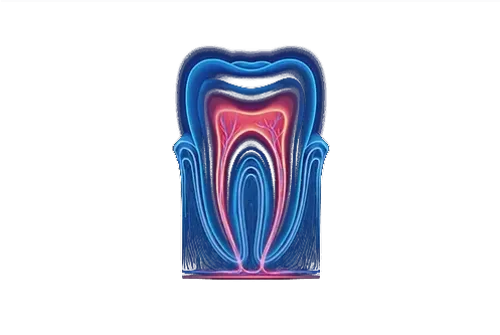
Contemporary Root Canal Treatment and Preservation of the Natural Tooth
Endodontic treatment aims to preserve the natural tooth when the dental pulp and tissues surrounding the root are affected by inflammation, infection, trauma, or previous unsuccessful root canal treatment.
At Laser Dental Clinic, endodontics is not regarded simply as mechanical preparation and filling of root canals. Treatment is based on precise diagnosis, infection control, biologically conservative preparation, disinfection of the root canal system, and subsequent structural and functional restoration of the tooth.
1. Diagnosis
Accurate diagnosis precedes every treatment. Depending on the individual clinical case, assessment may include:
- detailed medical and dental history and clinical examination;
- percussion, palpation and periodontal probing;
- pulp sensibility testing – thermal tests and electric pulp testing (EPT/EOD);
- comparative testing of control teeth;
- assessment of occlusal loading;
- digital intraoral/periapical radiographs;
- panoramic radiography and/or CBCT when specifically indicated;
- assessment of previously performed root canal treatment.
Electric pulp testing is not interpreted as an isolated diagnostic result but in conjunction with symptoms, clinical tests and imaging findings.
2. Primary Root Canal Treatment
In cases of irreversible pulpal damage or infection, treatment may include:
- access to the root canal system;
- working-length determination;
- mechanical preparation;
- chemical irrigation and disinfection;
- removal of infected tissue and microbial biofilm;
- intracanal medication between appointments when indicated;
- obturation of the root canal system;
- radiographic control.
The objective is to reduce the microbial load as effectively as possible and create biological conditions that support healing of the periapical tissues.
3. Laser-Assisted Endodontics
When clinically indicated, conventional mechanical and chemical preparation may be supplemented by laser-assisted decontamination. Laser technology is used as an adjunctive method and does not replace the fundamental principles of contemporary root canal treatment. Its purpose is to support disinfection within the complex root canal anatomy, including areas that may be difficult to access mechanically.
When indicated, photobiomodulation (PBM) protocols may also be incorporated to support local healing processes.
4. Endodontic Retreatment
A previously root-filled tooth may develop persistent or recurrent infection. Possible causes include:
- untreated or missed canal anatomy;
- insufficient initial disinfection;
- compromised root canal filling;
- bacterial recontamination;
- compromised coronal restoration;
- secondary caries;
- structural cracks or fractures.
When the prognosis supports preservation of the tooth, endodontic retreatment may be considered, followed by appropriate monitoring and definitive restoration.
5. Adjunctive Therapeutic
Methods According to individual clinical indications, treatment may also include:
- intracanal medication;
- iontophoresis;
- laser-assisted decontamination;
- photobiomodulation;
- low-level laser therapy;
- sequential clinical and radiographic monitoring.
These methods are selected individually according to the diagnosis and are not routinely applied to every patient.
6. Restoration After Root Canal Treatment
Root canal treatment does not end with obturation of the canals. The next objective is to protect the treated tooth against reinfection, fracture and excessive functional loading. Depending on the quantity and quality of the remaining tooth structure, treatment options may include:
- direct adhesive restoration;
- core build-up;
- fibre post when indicated;
- overlay or endocrown;
- crown or another individually selected prosthetic restoration.
The decision is based on the remaining sound tooth structure, ferrule effect, tooth position and functional loading, rather than solely on the fact that the tooth has undergone root canal treatment.
7. Follow-up
An endodontically treated tooth requires clinical and radiographic follow-up. Assessment includes:
- symptoms;
- tooth function;
- condition of the periapical tissues;
- progression of bone healing;
- integrity of the definitive restoration;
- occlusal loading.
When periapical changes are present, treatment outcome is evaluated over time, as biological and bone healing are ongoing processes.
8. When Is Endodontic Surgery Considered?
Surgical treatment is not automatically the next step following unsuccessful root canal treatment. It is considered in selected cases when conventional treatment or retreatment cannot provide adequate access to or control of the pathological process.
The central question remains: Can the natural tooth be preserved with a favourable long-term prognosis?
9. Endodontics and Comprehensive Dental Diagnostics
In patients with multiple root-filled teeth, chronic periapical or periodontal findings, or when comprehensive oral rehabilitation is required, extended dental focal assessment may be recommended.
This is performed under a separate diagnostic protocol and may include electric pulp testing, imaging and additional diagnostic methods according to individual clinical indications.
Our Principle
Diagnosis → infection control → preparation and disinfection → biological sealing → structural and functional restoration → long-term follow-up.
Our Goal
Not simply a “root-filled tooth”, but a preserved natural tooth capable of participating safely and effectively in the function of the entire masticatory system.