- Home
- Clinical Disciplines
- Oral Surgery & Implantology
Oral Surgery & Implantology
Tissue Preservation, Infection Control, Regeneration, Functional Rehabilitation
At Laser Dental Clinic, surgical treatment is part of a comprehensive treatment plan. Before every intervention, we assess whether the natural tooth can be preserved, the condition of bone and soft tissues, infectious and periodontal risk, and the requirements of the future functional and prosthetic restoration.
Our guiding principle is maximum tissue preservation, precise surgical technique, infection control and the creation of conditions for predictable healing and long-term function.
1. Surgical Diagnostics and Planning
The diagnostic scope is determined individually and may include:
- clinical and periodontal examination;
- assessment of tooth prognosis and tooth-preserving treatment options;
- intraoral radiographs and panoramic radiography;
- CBCT when specifically indicated;
- assessment of bone volume and relevant anatomical structures;
- soft-tissue assessment;
- occlusal and functional assessment in complex cases;
- restorative and prosthetic planning before surgery.
2. Before Extraction – Can the Tooth Be Preserved?
Extraction is not automatically considered the first option for a compromised tooth. When the clinical situation allows, the endodontic, periodontal, structural and functional prognosis is assessed, including whether the entire tooth or a predictably healthy part of it can be retained.
3. Tooth-Preserving Surgery
Tooth-preserving surgery is undertaken when the remaining part of the tooth has sufficient periodontal, endodontic, structural and functional prognosis and can be reliably restored.
- Hemisection – division of a multirooted tooth with removal of the compromised root and the corresponding coronal portion when the remaining part can be preserved and predictably restored.
- Root resection/amputation – selective removal of an affected root when clinically indicated.
- Apical surgery / apicoectomy – for selected endodontic indications.
- Surgical management of localised periapical pathological processes.
- Surgical crown lengthening when indicated.
- Other tooth-preserving procedures according to the individual prognosis.
4. Extractions and Oral Surgical Procedures
The technique is selected with the aim of preserving available tissues as far as possible and taking subsequent restorative or implant-prosthetic treatment into account.
- atraumatic extraction whenever feasible;
- surgical extractions;
- impacted and partially impacted teeth;
- management of local surgical inflammatory processes;
- alveolar and soft-tissue surgery when indicated.
5. Laser-Assisted Surgery
When clinically indicated, laser technology may be integrated into the surgical protocol for precise soft-tissue management, haemostasis and support of local operative-field control. The choice of laser, technique and parameters depends on the tissue, procedure and individual clinical situation. Laser assistance is part of the surgical protocol and does not replace the fundamental principles of surgical treatment.
6. Laser Decontamination
In surgical, periodontal and peri-implant procedures, laser treatment may be used, when clinically indicated, as an adjunctive method for local decontamination and reduction of microbial load. Laser decontamination is combined with the necessary mechanical treatment, surgical control and standard therapeutic protocols rather than used as a substitute for them.
7. Laser Biostimulation / Photobiomodulation (PBM)
Following surgical procedures, low-level laser therapy / photobiomodulation may be used when indicated to support local healing processes and postoperative comfort. Photobiomodulation is an adjunctive method and is applied according to an individual protocol based on the type of intervention and the clinical condition.
8. Periodontal and Mucogingival Surgery
The surgical approach is adapted to the periodontal diagnosis, phenotype, bone anatomy and future treatment plan.
- resective and regenerative periodontal procedures when indicated;
- soft-tissue correction;
- surgical crown lengthening;
- soft-tissue plastic surgery and management;
- preparation of tissues for restorative, prosthetic or implant treatment.
9. Bone and Soft-Tissue Regeneration
When bone or soft-tissue deficiencies are present, regenerative and augmentation procedures may be planned according to the specific anatomy and treatment objective. Regenerative potential and prognosis are assessed individually; not every defect permits the same degree or predictability of reconstruction.
- bone substitute and regenerative materials when indicated;
- membrane techniques according to the individual case;
- preservation or reconstruction of alveolar volume;
- soft-tissue regenerative procedures;
- preparation for future implant-prosthetic treatment.
10. Autologous Regenerative Approaches – PRP
When clinically indicated, autologous platelet concentrates, including PRP, may be used as an adjunct to surgical and regenerative protocols. They are derived from the patient's own blood and used according to the specific clinical objective. Autologous concentrates do not replace sound surgical technique, wound stability, infection control or required regenerative materials.
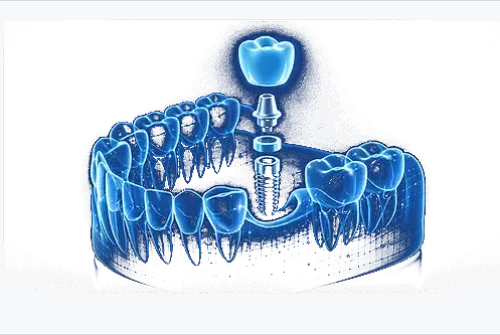
11. Implant Treatment
A dental implant is not considered an end in itself, but part of a pre-planned future functional and prosthetic rehabilitation. Before implant placement, the following are assessed:
- general and local clinical status;
- periodontal health and infection control;
- bone volume and anatomical limitations;
- soft-tissue conditions;
- space and position required for the future prosthetic restoration;
- occlusal loading;
- the ability to maintain effective long-term hygiene and professional maintenance.
12. Augmentation Procedures and Implant-Site Preparation
When the available bone or soft-tissue volume is insufficient for the planned implant treatment, appropriate augmentation procedures may be considered. The technique is selected following clinical and radiographic assessment and forms part of the overall surgical-prosthetic plan.
13. Surgical-Prosthetic Planning
Implant position is planned in relation to the future restoration, anatomical conditions, soft tissues, occlusion and functional loading. The aim is for the surgical stage to create conditions for a biologically and functionally sustainable prosthetic restoration.
14. Postoperative Follow-up and Maintenance
Follow-up and maintenance are integral to long-term prognosis.
- monitoring of the surgical site and healing;
- assessment of symptoms and soft tissues;
- photobiomodulation when indicated;
- radiographic follow-up when clinically necessary;
- periodontal and peri-implant prevention;
- individual professional oral hygiene;
- long-term monitoring of implants and prosthetic restorations.
Clinical Algorithm
Diagnosis → assessment of whether the natural tooth can be preserved → biological stabilisation and infection control → surgical/regenerative treatment when indicated → laser assistance, decontamination and photobiomodulation according to the case → healing and reassessment → definitive functional-prosthetic rehabilitation → long-term maintenance.
Our Principle
Maximum preservation of natural tissues, the minimum necessary surgical intervention, and advance planning of the final functional outcome.
Our Goal
Not simply a surgical procedure or a placed implant, but a biologically stable, functional and maintainable long-term rehabilitation.