- Home
- Clinical Disciplines
- Orthodontics
Orthodontics
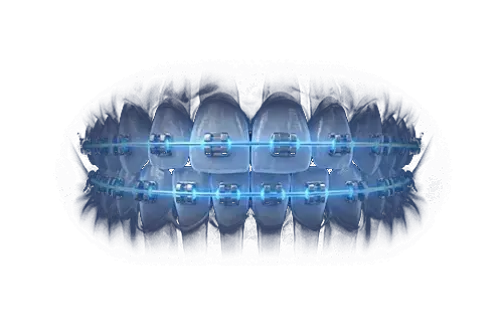
Functional and Individualised Orthodontic Treatment
At Laser Dental Clinic, orthodontic treatment does not begin with the choice of an appliance. It begins with diagnosis – assessment of dental and skeletal relationships, growth, periodontal and bony support, occlusion and the function of the masticatory system.
The goal is not merely to align the teeth, but to achieve a biologically appropriate, functionally balanced and long-term stable result.
1. Diagnosis Before Treatment Selection
The diagnostic scope is individualised according to age, the clinical problem and the treatment objective.
- clinical orthodontic examination;
- photographic documentation;
- digital impressions/intraoral scanning;
- panoramic radiography (OPG);
- lateral cephalometric radiography (CEPH) and cephalometric analysis;
- assessment of the bite and occlusion;
- temporomandibular joint (TMJ) assessment;
- periodontal assessment and evaluation of bony support.
2. Growth and Skeletal Relationships
In children and adolescents, growth and development are assessed in order to distinguish the dental, functional and skeletal components of the problem. This allows treatment timing and method to be adapted to the individual growth potential.
3. Functional Diagnostics
Functional investigations do not replace the orthodontic diagnosis; they complement it and support individual treatment planning and follow-up.
- occlusal analysis;
- assessment of the masticatory muscles;
- Teethan EMG when indicated;
- TMJ assessment;
- evaluation of breathing, tongue posture and function, and swallowing;
- APECS postural assessment when indicated;
- additional functional tests according to the individual case.
4. Periodontal and Biological Risk
Not every desired orthodontic movement is biologically appropriate. When bony support is limited, treatment is planned within the patient's individual biological boundaries.
- periodontal phenotype;
- level and quality of bony support;
- gingival and periodontal health;
- presence of dehiscences and fenestrations;
- direction and planned extent of orthodontic tooth movement.
5. Orthodontic Treatment Methods
The method is not selected solely according to a preference for a particular appliance. Selection is based on diagnosis, age and growth, skeletal and dental relationships, periodontal and bony support, function and the specific treatment objective.
- Functional orthodontic treatment – ORTHO-T: when clinically indicated, with individual exercises, monitoring and periodic reassessment.
- Clear aligners: digitally planned and controlled orthodontic tooth movement.
- Fixed orthodontic appliances: when required by the clinical case and the planned tooth movements.
- Segmental/limited orthodontic treatment: correction of selected teeth or a specific segment for a defined treatment objective.
- Combined functional and orthodontic treatment: functional preparation followed by orthodontic finishing, including clear aligners when indicated.
- Retention treatment: stabilisation and long-term maintenance of the achieved result.
6. Pre-Prosthetic Orthodontics
In complex restorative and prosthetic cases, orthodontic treatment may serve as a preparatory stage before definitive prosthetic rehabilitation. The objective is not necessarily comprehensive orthodontic alignment, but the creation of more favourable biological, spatial and functional conditions for the subsequent restoration.
- correction of the position and inclination of individual teeth;
- creation or redistribution of space for future restorations;
- improvement of interproximal relationships and contacts;
- preparation for crowns, bridges or implant-supported prosthetic treatment;
- correction of occlusal relationships;
- orthodontic uprighting or extrusion when clinically indicated;
- limited orthodontic treatment of a specific segment;
- coordination of orthodontic tooth movement with periodontal and bony support.
7. Orthodontics and Periodontal Health
Active orthodontic treatment is carried out under controlled gingival and periodontal conditions.
- professional oral hygiene;
- control of plaque and gingival inflammation;
- periodic periodontal reassessment;
- individual preventive and maintenance programmes.
8. Treatment Monitoring
The treatment plan may be adapted according to the biological response and the interim results achieved.
- clinical and photographic reviews;
- digital scans/models when required;
- imaging only when clinically indicated;
- comparative functional and Teethan EMG assessments when indicated;
- postural reassessment when clinically relevant;
- assessment of occlusion and TMJ function.
9. Retention and Long-Term Stability
Retention is an integral part of treatment. Long-term stability depends not only on tooth position, but also on function, occlusion, periodontal health and individual risk factors.
- individually selected retention;
- occlusal control;
- assessment of muscular and functional balance;
- periodontal health monitoring;
- preventive maintenance programme.
In Complex Treatment
Oral rehabilitation and periodontal stabilisation → functional diagnostics → orthodontic/pre-prosthetic preparation → reassessment → definitive restorative or prosthetic treatment → functional control.
Definitive prosthetic rehabilitation is planned on the best possible biological, orthodontic and functional foundation.
Our Principle
Diagnosis → biological and functional assessment → individual selection of treatment method → controlled orthodontic treatment → functional balancing → retention → long-term follow-up.
Our Goal
Not simply straight teeth. Our goal is an orthodontic result achieved within biological boundaries and combined with stable occlusion, periodontal health and balanced function.